Bespoke Material Design, Made Together
Material design is rarely a solo act. The best outcomes grow from conversation—from sharing ideas, testing possibilities, and responding to what a space or story needs.
Some of our favourite collaborations begin not with a brief, but with a conversation. A colour, a mood, a feeling someone wants to evoke in a space. The way light might catch the edge of a table. A fragment of waste from a past project that someone can’t bear to throw away.
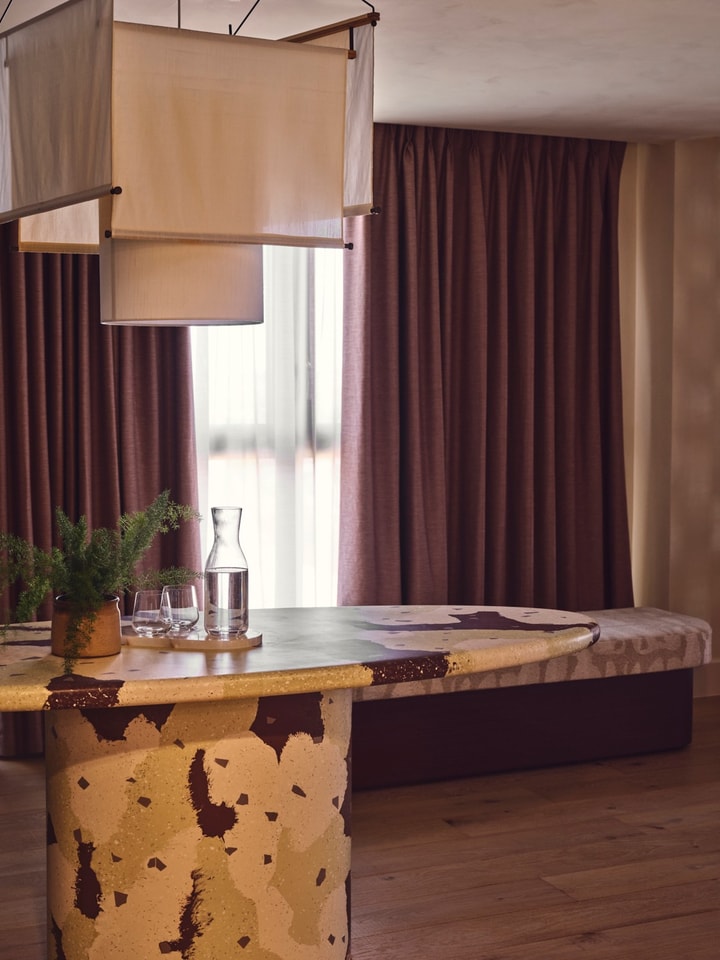
That’s exactly how our table for The Sessile, London came to life. Working closely with The Furniture Practice and a Linda Boronkay, we developed a bespoke material design using our plastic waste. The surface was custom-made to match the interior palette—balancing tone, pigment and texture to bring the space to life.
For us, bespoke material design is always collaborative. Our process is hands-on and iterative:
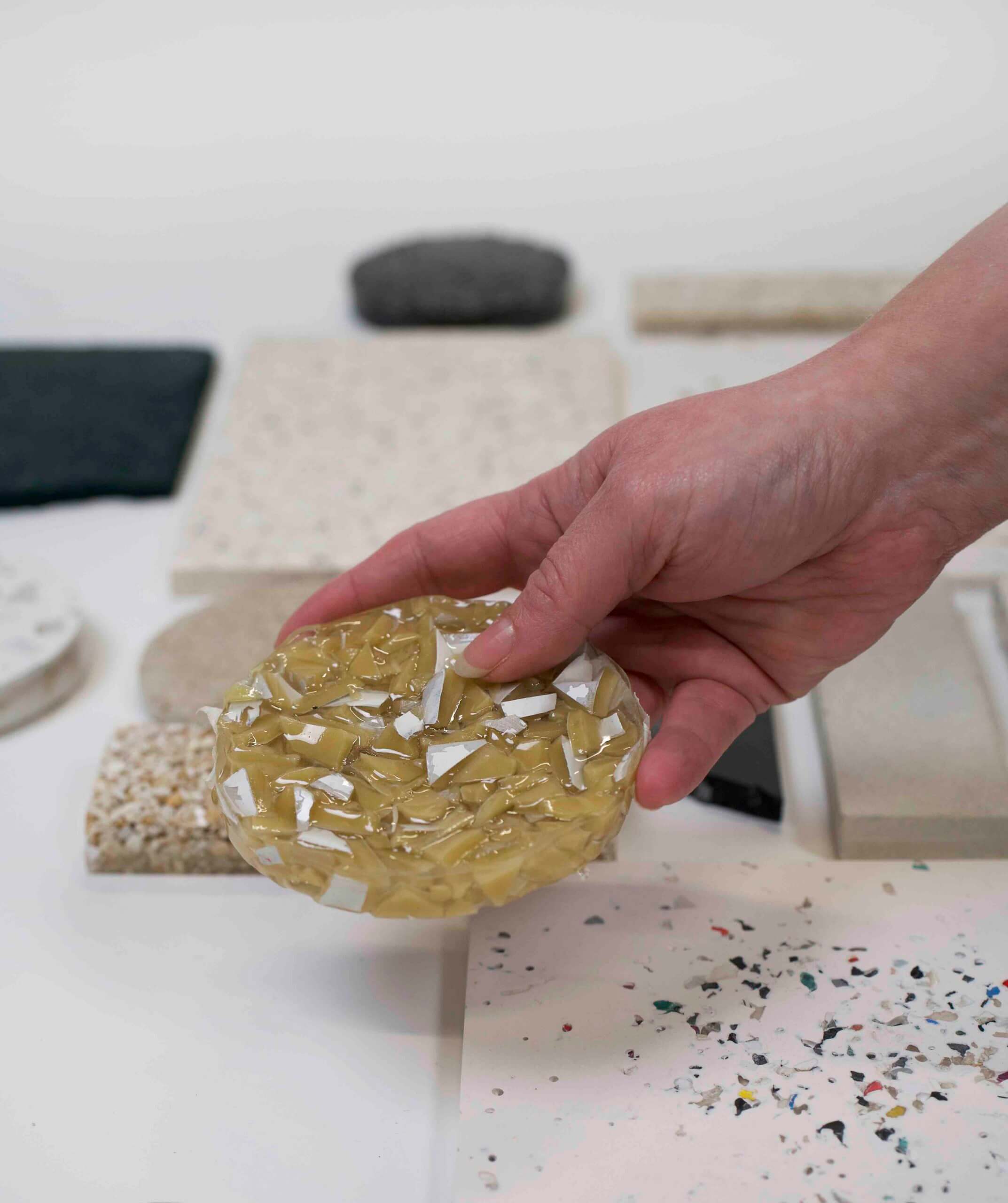
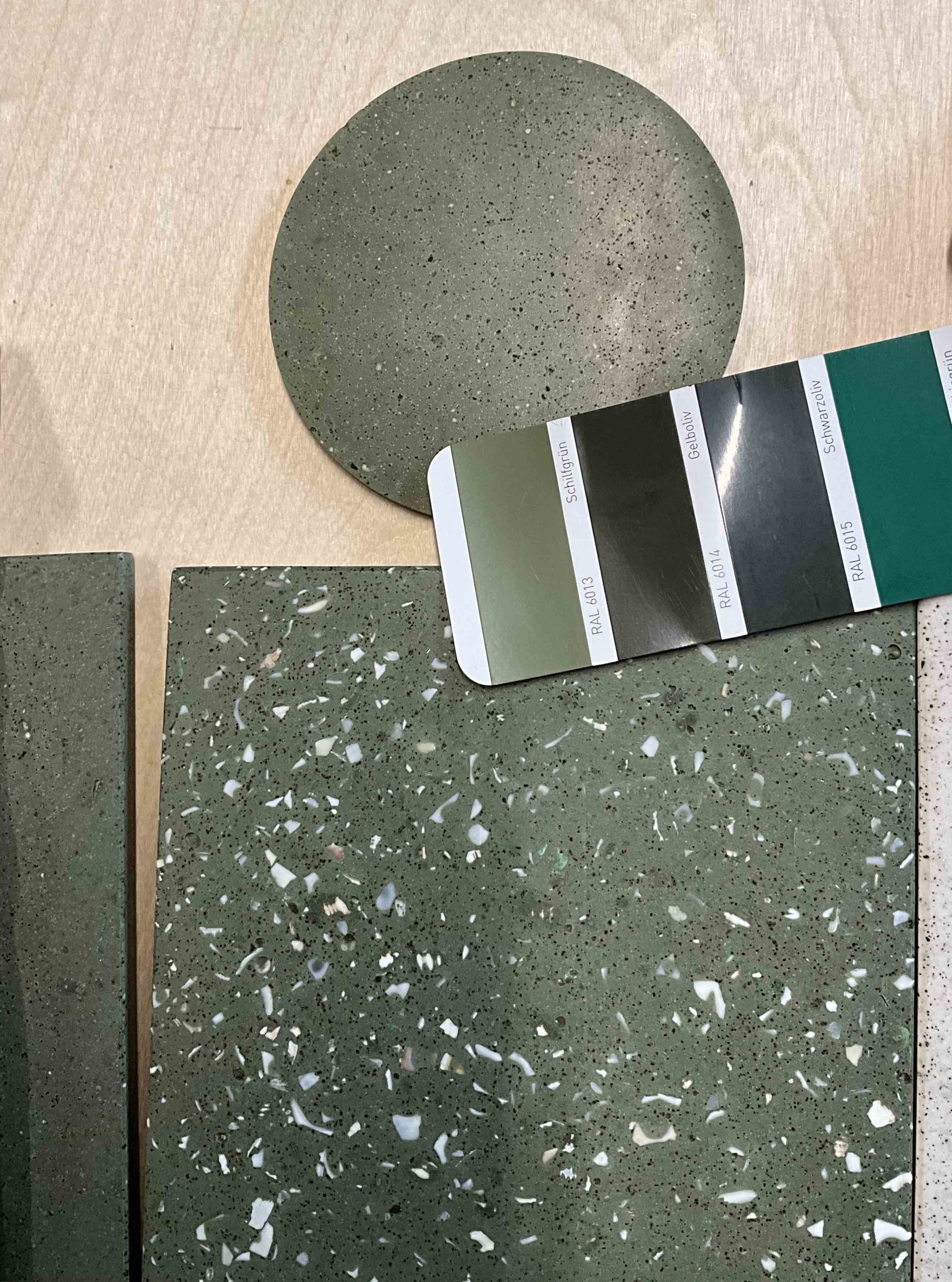
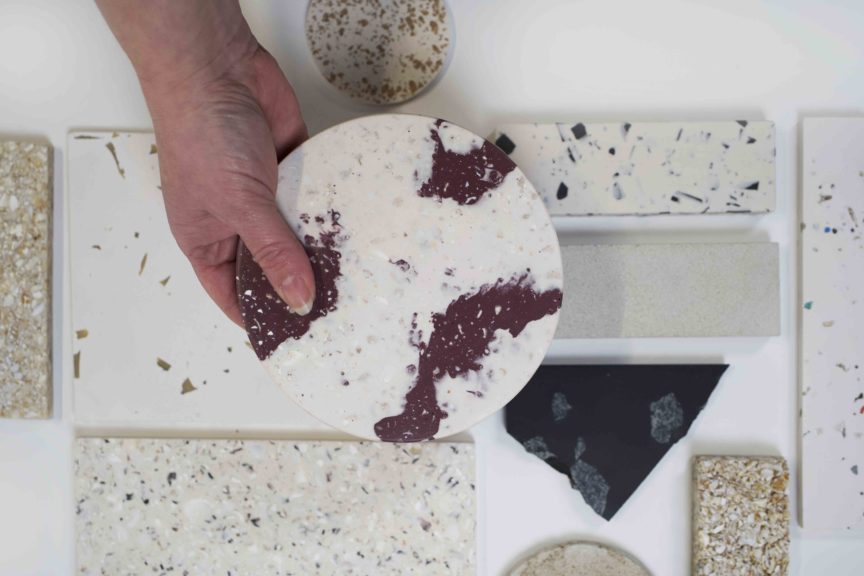
- We begin with samples and swatches, experimenting with colour, tactility, and the properties of different waste streams.
- We prototype early, share ideas quickly, and stay open to creative direction throughout.
- Every project is a two-way dialogue—one that’s shaped by the ambitions of the designers and the possibilities of the material.
It’s a process we’ve shaped alongside partners like CHD Design (on tills and fixtures for Fortnum & Mason), Ryan Rankin Studio (on sculptural forms for a private residence), and Holland Harvey (on tables & cake stands for Tate Modern).
We see bespoke material design not as a product to deliver, but as a conversation to enter. That’s what makes it meaningful. That’s what makes it work.