What Responsible Design Really Looks Like
When we talk about responsible design, it’s easy to think about materials first. And of course, they matter — choosing the right sustainable materials can reduce harm, close loops, and give waste a second life. But for us, responsibility begins before a single material is chosen. It starts with asking the right questions:
-
Who will this serve?
-
How will it live in the world?
-
What will happen when it’s no longer needed?
Design has the power to shape not just spaces and objects, but the relationships we have with them — and with the planet itself. Thoughtful, waste-based design and a mindset of design for longevity can shift how people value what they own and interact with every day.
Our work is built on reciprocity with nature. We don’t believe in designing less badly; we believe in designing in a way that contributes back — through storytelling, material innovation, and partnerships that turn waste as a resource into something of enduring value.
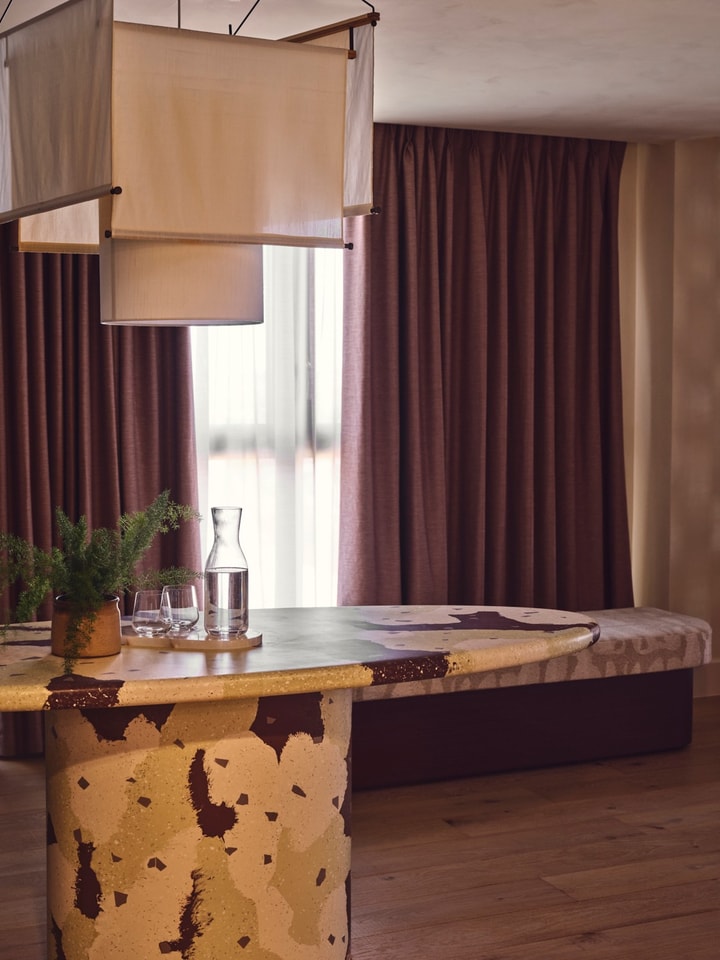
We’ve made large-scale art for cruise ships from repurposed materials such as CDs and seashells, where every piece holds the memory of the material’s former life. We’ve created tables from construction waste on the very site they were installed — a small act of circular design that closed the loop not just in supply, but in story. We’ve turned brand waste into bespoke awards, keeping the client’s own history embedded in each object and proving that waste as resource can be both practical and beautiful.
For us, these aren’t one-off experiments — they’re part of a sustainable design practice where aesthetics, function, and responsibility work together. It’s about understanding that responsible design is as much about process as product. It’s about collaboration — with clients, with craftspeople, with materials — to make something beautiful without taking more from the Earth than we give back.
We believe responsible design:
-
Values longevity over trends — making work that will be loved and kept.
-
Creates emotional connection — so people want to protect and care for what’s made.
-
Embeds story and meaning — because context shapes how something is valued.
-
Sees waste as opportunity — reimagining what’s already here instead of extracting more.
Responsible design isn’t a single action or choice — it’s a mindset, a series of decisions that add up over time. In our practice, it’s less about a checklist and more about a relationship with the world we’re designing in.
Because ultimately, designing for good isn’t just about avoiding harm. It’s about creating objects that carry forward the value of what already exists — a form of sustainable craftsmanship that respects both material and maker.
Read more here from the Ellen MacArthur Foundation – Circular Design: Turning Ambition into Action.